
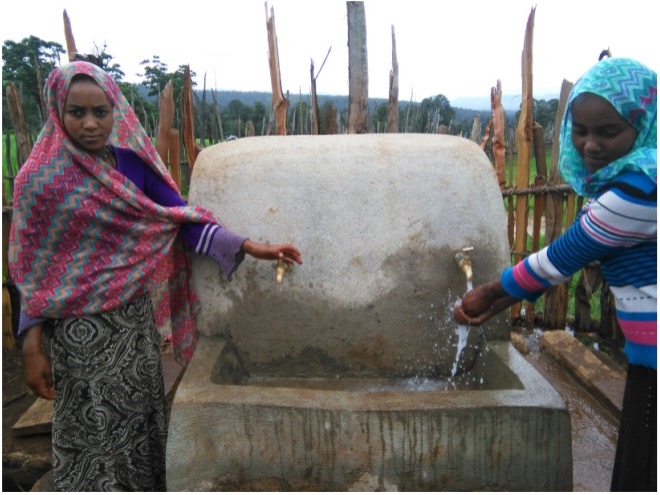
Even after the school was constructed by SFC and ABDI, we still faced a big challenge due to lack of drinking water. There was no drinking water in the area and the water from the river and spring was far from the school.
Read more
We children were forced to carry unclean water to drink at school, which exposed us to water-borne diseases. Our mothers suffered a lot when we were sick. Now, we are very happy that clean water is available at our school and near our home. It is our responsibility, as well as that of the school community, to use it properly and ensure its sustainability. As students, we will ensure that it is used properly and also encourage our parents to take utmost care of it. We must all remember our past situation and the challenges we faced. I am also glad to say that our school performance is improving because the burden of fetching water from far away has been reduced, and we are no longer missing school.
–Rodala, age 12, grade five student living in Adaba village
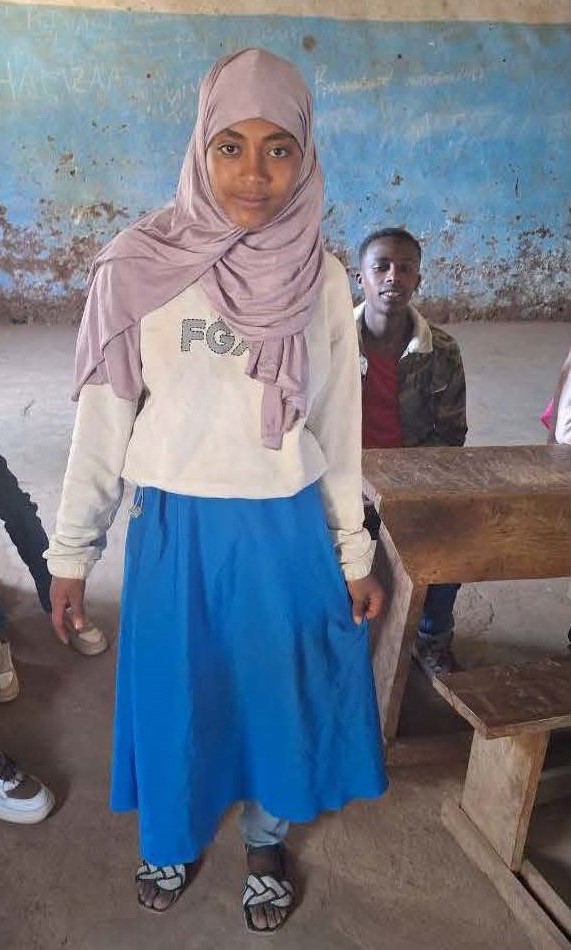
I am a grade 8 student at Terefa-Haro School. Before this school was constructed in our locality, we faced many challenges in accessing education. We had to travel long distances, about 10 to 12 kilometers, to attend Bucha and Bosofitu schools.
Read more
Because of this long journey, we often arrived at school late and tired. Sometimes we missed classes and could not attend makeup lessons. Due to these difficulties, many girls were not sent to school by their parents. After this school was constructed in our locality, close to our community, we are able to attend our education properly. Our parents send us to school just like our brothers. We now have equal opportunities and the right to learn in a convenient and supportive school environment. If this school had not been constructed, many of us girls would not have had the opportunity to receive an education. –Idi, 13 years old, Adaba village
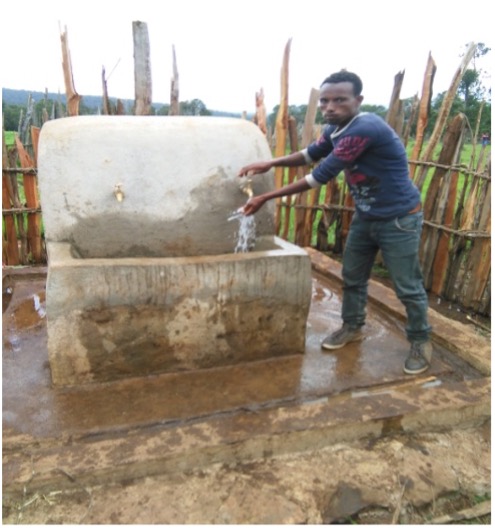
I am serving my community as a member of the Water Management Committee, which was established by the project. Ever since I was young, there has been a severe lack of clean drinking water in our area.
Read more
Our children were facing challenges due to a lack of clean water. They were fetching and drinking unclean water from the river, carrying it in plastic containers to school, and this exposed them to various water-related diseases. Our mothers and sisters also faced great difficulties carrying water on their backs over distances. After the water project was approved and funded by SFC and implemented by ABDI in collaboration with community members, our lives have changed significantly. As a community member, I remember that participating and completing the project activities was sometimes challenging, especially transporting construction materials (stones, sand and cement) on our animals and on our backs, or digging difficult terrain for the water pipelines, etc. Despite this, we were able to overcome all the challenges and complete the project in collaboration with all the stakeholders. Now, the whole community is happy that we have safe and clean water in our village. I am also proud to serve my community as a member of the Water Management Committee. Thanks to the training and guidance we received from the project, we are able to fulfil our responsibilities and ensure that the water system is properly used and maintained.
– Adan, age 25 living in Adaba village
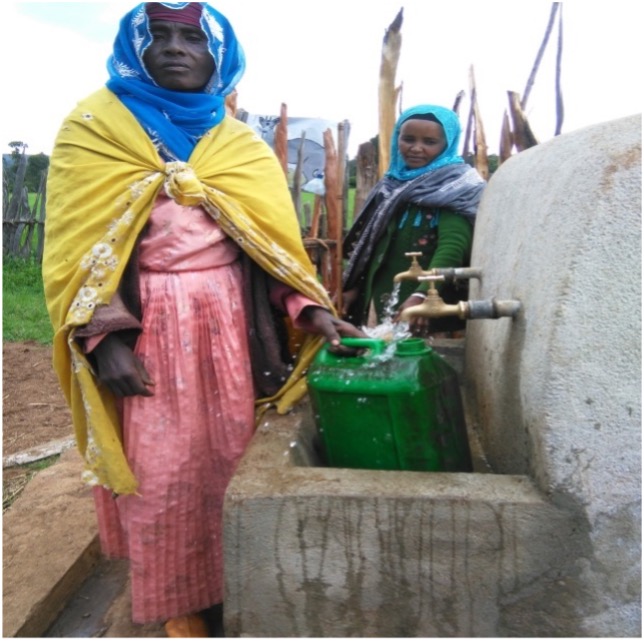
I have been living in this village my whole life. Before this project, there was no access to clean drinking water in this area. I used to travel about two kilometers to fetch water from the river and carry it back home.
Read more
Thanks to the project, now I can access water within 50 meters distance from my home. It feels like I have been born again. The dirty water that we shared with our livestock exposed us and our children to various diseases. Our children, who were attending school, were forced to carry dirty water with them every day. After we received the opportunity to have the water project, we were all very happy. Our children can access clean water at school, allowing them to focus on their studies. They also plant various tree seedlings to protect the environment. We are also using the water to build additional classrooms for the school. I am proud and confident to say that this water project has brought significant benefits to us women, who suffered greatly from having to search for water over long distances and from our children getting sick because of dirty water. I can also confidently say that our productivity as women has increased significantly since we no longer have to spend time fetching water or taking care of sick children. Now we use the time for income-generating activities and running small businesses.
– Amala, age 60 living in Adaba village
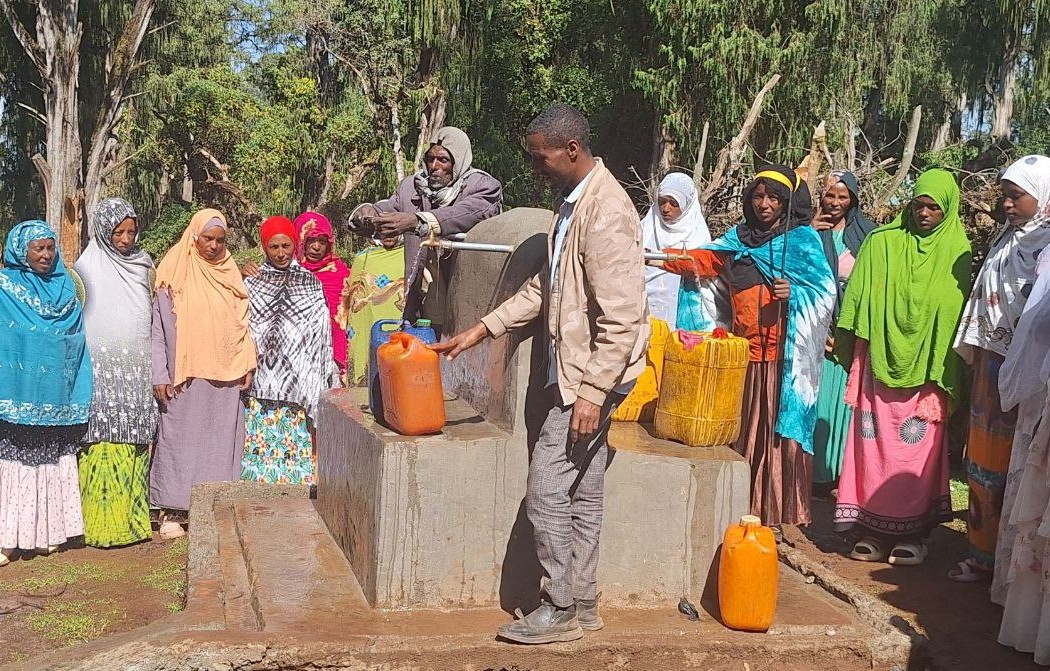
I have seven family members including me and my husband, and I am a respected women’s cultural leader who is culturally entitled to promote women’s rights within the Harewa community.
Read more
As a woman who has lived through the challenges of accessing clean water, I am honored to share my story and vision for the future of our village. Growing up, the lack of reliable water sources was a constant burden on my family and our entire community. We spent hours each day walking to the nearest water point, often an unclean pond or a river to fetch water. This difficult task took a toll on our health, as waterborne illnesses were a common occurrence. It also limited our ability to focus on other essential aspects of our lives, such as education, economic activities, and community development. When I first heard about the water project, I knew this was a transformative opportunity that we could not let slip away. Drawing on my position as a cultural leader, I mobilized the women of the locality to actively participate in every stage of the water project. We contributed labor, financial resources, and our collective wisdom to ensure the project’s success. The level of community engagement, especially among the women, was inspiring. We worked side-by-side, digging pipeline ways, transporting materials, and constructing the water source, water reservoir, and water points. Our financial contributions, though modest, demonstrated our unwavering commitment to this project and our belief in its potential to change lives. At this moment, the water structures are operational and providing clean water in the school compound, at the central community space, and even in the local mosque compound. The positive transformations are evident. Our children no longer have to miss classes to fetch water, and their health has significantly improved. Women like myself have more time and energy to engage in income-generating activities and community initiatives. But our work didn’t stop here. Utilizing my position as a cultural leader, in collaboration with ABDI project staff, I have organized the women of Harawa village into women’s self-help groups, empowering them to become agents of change in our community. Through these groups, we are developing a culture of savings and credit, enabling women to start small businesses and achieve greater financial independence. Moreover, we have become more aware of our rights and entitlements, advocating for improved access to essential services and resources. This newfound confidence and unity among the women of Harawa locality has been a driving force in our community’s development. As we celebrate the success of the water project, I must also raise my voice to address the pressing need for our school renovations. The classrooms and facilities at our local primary school are in a deplorable state, posing risks to the safety and well-being of our children. If we will receive some support from SFC and ABDI, I am committed to using my position as a cultural leader to mobilize and convince the entire community, both men and women, to actively participate in the school renovation process. Together, we can build a brighter future for the children of Harawa-Haro locality, empowering them with the knowledge and skills they need to flourish.
– Fura, age 38, women cultural leader, living in Harewa village
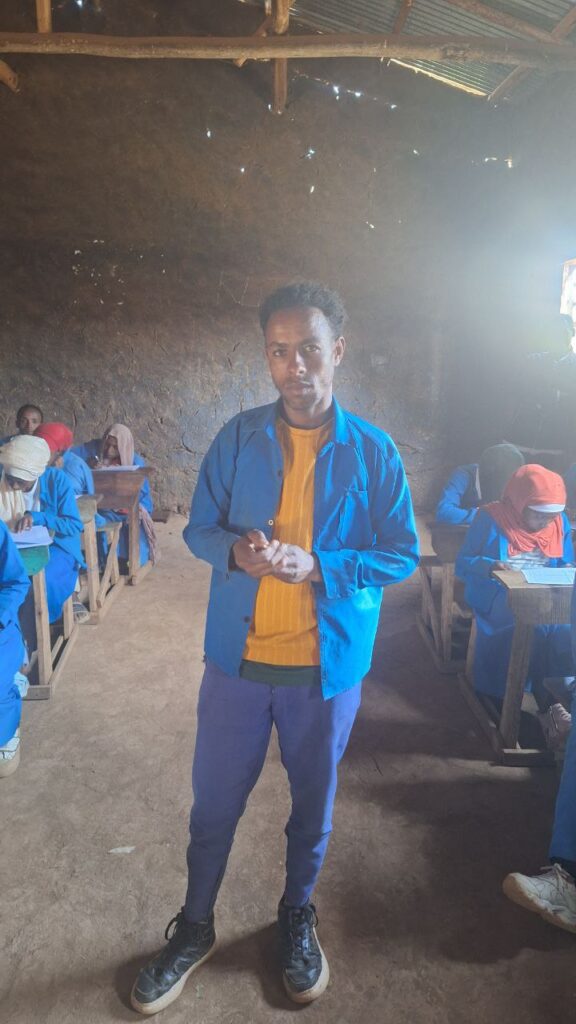
Before this school was constructed in this village, children were forced to travel long distances to Bucha and Busoftu schools (about 10 kms and 12 kms), respectively. As a result, we and our elders couldn’t attend our education while we were children, around 7 to 8 years old.
Read more
Many of our brothers and sisters were forced to drop out of their education and become farmers. Now, after education was started under the shed of trees by volunteer teacher, and then the school was properly constructed through the support of non-government organizations (ABDI and SFC), we are properly attending our education.
Our small children (3 to 5 years) have also got the opportunity to start their kindergarten education in their childhood/early, since the school is in our locality and close to our community. I can say that we were moved from dark to light. Our education performance has also improved. We are very happy in acquiring education facilities in our locality and I would like to thank the supporters and ask for additional support for the school renovation and for school materials and equipment. I’m giving this interview in an additional classroom constructed by the community members which needs some improvements. –Abdu, 18 years old, grade 8 student, Abada village
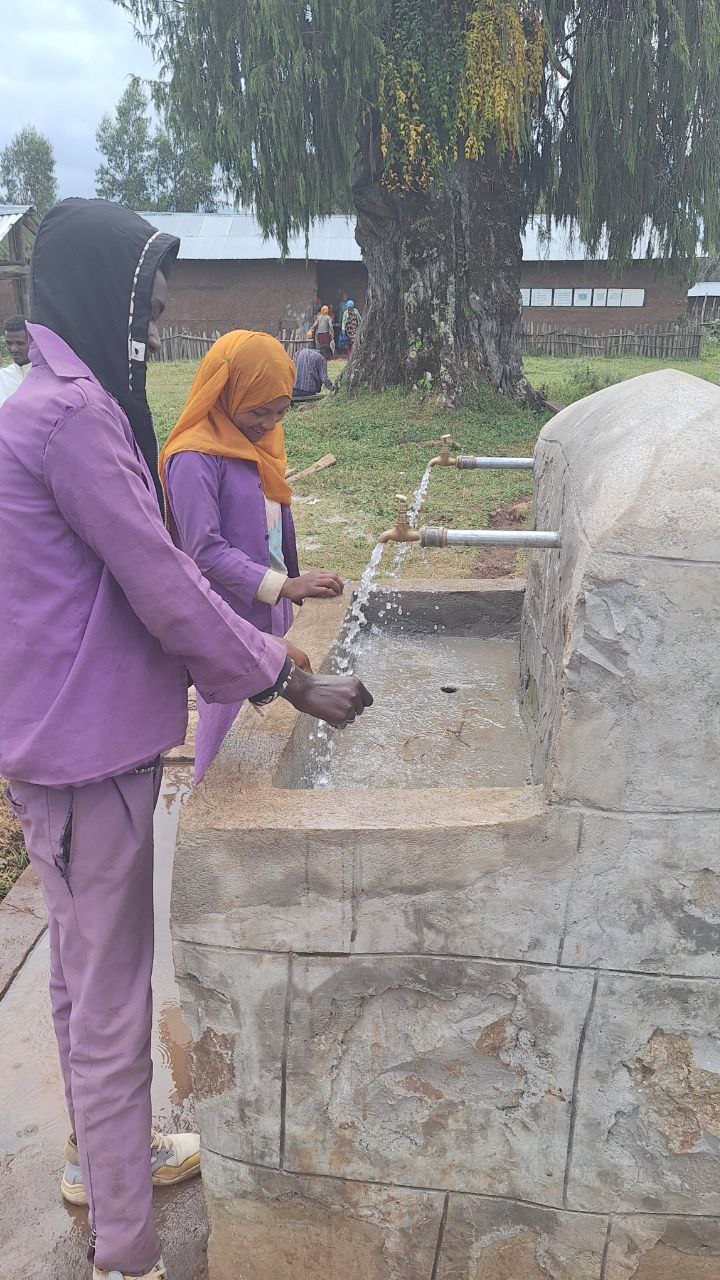
Before the water point was built, I used to spend hours every day helping my mother fetch water from the river. It was gruelling work, and I often came to school feeling exhausted and dehydrated.
Read more
The river water was dirty and unsafe, and I constantly worried about getting sick. Many times, I had to leave school early to help my mother, missing important lessons and falling behind in my studies. But now, with a water point right here on our school compound and another one for the community of the village, everything has changed. I no longer have to worry about leaving my class to fetch water. I can finally focus on my education without the constant distractions. My mother, bless her, now has more time and energy to care for our family’s well-being. The difference in my academic performance has been remarkable. I am more alert, engaged, and motivated in class. My grades have improved, and I feel confident that I can achieve my dream of becoming a teacher or a doctor one day. However, as grateful as I am for the new water point, I must still express my concerns about the overall condition of our school facilities. Our classrooms desperately need renovation. The walls are crumbling, the floors are dusty, and the roofs leak whenever it rains. The toilets are also in a terrible state; they are unsafe, unhygienic, and unsuitable for students, especially young girls like myself. We want to learn in an environment that is clean, safe, and conducive to our growth and development. We hope we can have support from SFC and ABDI soon so we can transform this school into a proper education centre where students like me can succeed and reach our full potential.
– Amila, age 15, grade six student living in Harewa village
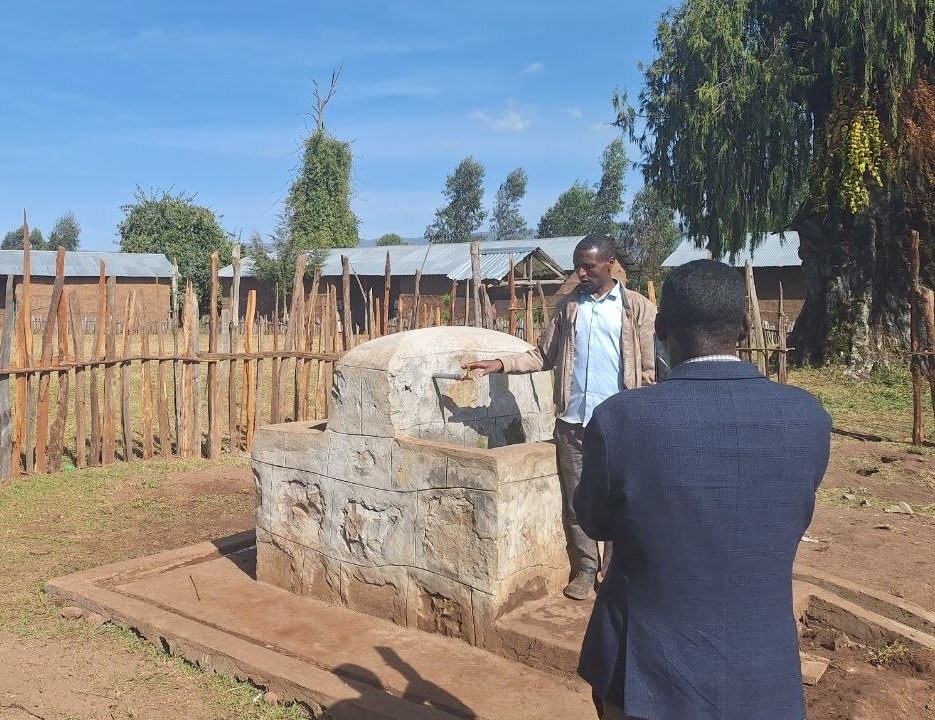
I am the principal of Harewa primary school. I’m 40 years old, and I’ve dedicated my life to ensuring that the children in our community receive the quality education they deserve. When I first took this role 2 years ago, I was heartbroken to see the state of our school.
Read more
The classrooms were in disrepair, with dusty floors, unplastered walls, and ceilings that offered little protection. The lack of basic furniture and teaching materials made it incredibly challenging for our teachers to provide a stimulating learning environment for the students. But the most pressing issue was the severe shortage of clean water, both for the school and the wider community. Our children were forced to trek to the nearby river and ponds to fetch water, risking their health and safety. It was a burden that no child should have to bear, and it deeply troubled me.
Determined to find a solution, as a community we reached out to ABDI and SFC, two organizations that had a track record of supporting development initiatives in our region. We shared the disastrous situation we were facing, and to my delight, they were immediately responsive and eager to help. Jointly, we devised a plan to address the clean drinking water shortage by developing a spring-fed clean water scheme, pulling water from a source 4 kilometers away and ensuring a reliable supply for our school and the entire community. The school community and local residents actively participated in this project, contributing their time, labor, and local resources to make it a success.
The impact of this water project has been truly transformative. Our classrooms are now clean, and students have access to water for hygiene, drinking, and even watering the school’s tree seedlings. Teachers are also happier and more willing to live in the locality now that they have access to clean drinking water. This has not only improved the learning environment but has also fostered a strong sense of pride and ownership within the community..
While we are thankful for the progress we’ve made, there is still more work to be done. Our school building requires considerable renovations to bring it up to the standard our children deserve. We need proper flooring, plastered walls, and finished ceilings to create a truly conducive learning and teaching environment.
Our children are the future of the Harawa locality, and they deserve the best possible start in life. With your help, we can ensure they have access to quality education and the resources they need to thrive. We are grateful for your support and look forward to seeing the positive changes we can bring about together.
–Suletan Hulle, principal of Harawa-Haro primary school
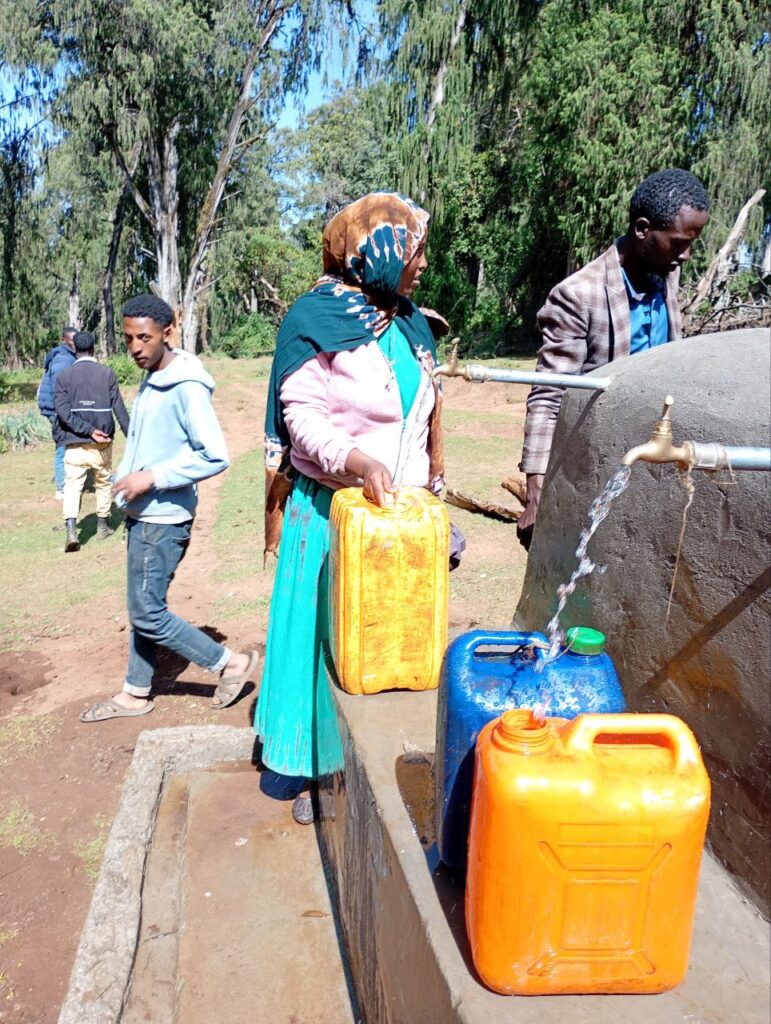
I am a mother of two children living in the Harewa locality. When ABDI and SFC first approached our community about developing a new water project, I was filled with hope and excitement.
Read more
Access to clean, reliable water had been a constant struggle for my family and our neighbors for far too long.
What struck me most throughout the project’s implementation was the level of community involvement and ownership. From the very beginning, local Harawa-Haro community members—including students and mothers like myself—actively participated by contributing our own resources, money, labor, and time. We were determined to make this water project a success and ensure it would serve us for years to come.
During the construction phase, we provided labor to assist the construction professionals recruited by ABDI. We helped dig trenches, transport materials, and even construct the water reservoir and water points. Our financial contributions, though modest, demonstrated our commitment to this initiative. We knew that by investing our own resources, we would have a greater stake in the project’s long-term sustainability.
Now that the water reservoir and water points are operational, our community has established clear rules and regulations for management and maintenance. We have formed a Water Management Committee (WMC) that collects a small monthly fee from each household to cover the costs of repairs and upkeep. This ensures that the water structures continue to function reliably without placing a burden on any single family.
As a mother, I am deeply grateful for the positive impact this water project has had on my family’s life. No longer do I have to spend hours each day fetching water from distant and contaminated sources. My children’s health has improved, and I have more time to focus on their education and supporting our household.
However, our community’s needs extend beyond just the water structures, which enabled us to acquire clean drinking water. As I’ve said to the ABDI and SFC teams, we urgently need support to renovate and upgrade the facilities at our local primary school. The classrooms are in disrepair, and the bathroom/toilets conditions are simply unacceptable. Our children have to learn and grow up in a safe, clean, and comfortable school environment.
I am confident that with the continued partnership of ABDI and SFC, we can address these remaining challenges and transform our community. Our active involvement and commitment to sustainable solutions demonstrate our unwavering dedication to the well-being of our families and the future of our children. – Ashu Erbo, mother living in Harewa village
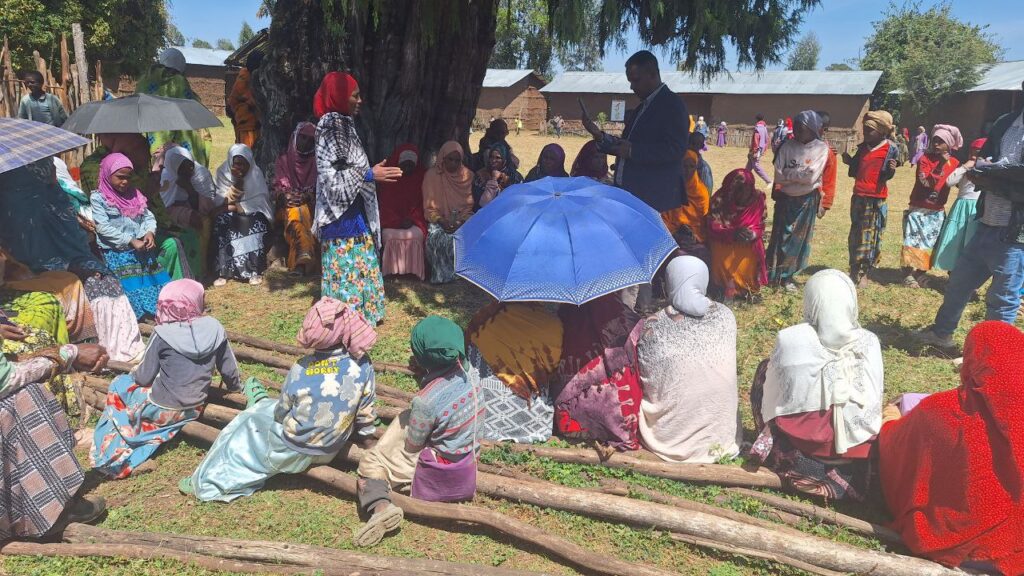
I am a 35-year-old mother of six children. Our family consists of eight members, including my husband and me. I would like to express my sincere gratitude for the life-changing water structures.
Read more
Before this project, my family and I had to walk for more than an hour to reach the nearest water source, and even then, the water was often contaminated and unsafe to use.
The new water structures have been a game-changer for us. I can now easily access clean and reliable water within our village. This has saved me significant time and energy, allowing me to devote more attention to caring for my family and to engage in income-generating activities. The health of my children has also improved dramatically, as we no longer suffer from the waterborne illnesses that were once a constant challenge for our household.
While I am deeply thankful for the water point, I would like to raise an important appeal. Our children’s school is in urgent need of renovation and upgrades. The classrooms are dusty, dilapidated, and below standard, and the toilet facilities are inadequate and pose serious health risks.
My children deserve to learn and grow in a safe and hygienic environment. I worry constantly about their well-being and the impact these substandard school conditions may have on their education and development. As a mother, I am pleading for your help to improve the infrastructure of our local school.
With your support, we can ensure that our children have access to modern, well-equipped classrooms and proper sanitation facilities. This would not only enhance their learning experience but also safeguard their health and set them on a path toward a brighter future. – Deru Kebede, mother living in Harewa village